
You wake up and your calves feel stiff. You spend an hour at your desk and your neck or shoulders feel tight. You stretch, use a foam roller, or book a massage—and for a while, you feel better. But by later that day or the next morning, the same tight feeling returns.
This creates a common question: “If I keep stretching the muscle, why does it keep feeling tight?”
The answer is that tightness is a sensation, not necessarily proof that a muscle has physically shortened. It can reflect how your muscles, joints, nervous system, movement habits, workload, and recovery are interacting.
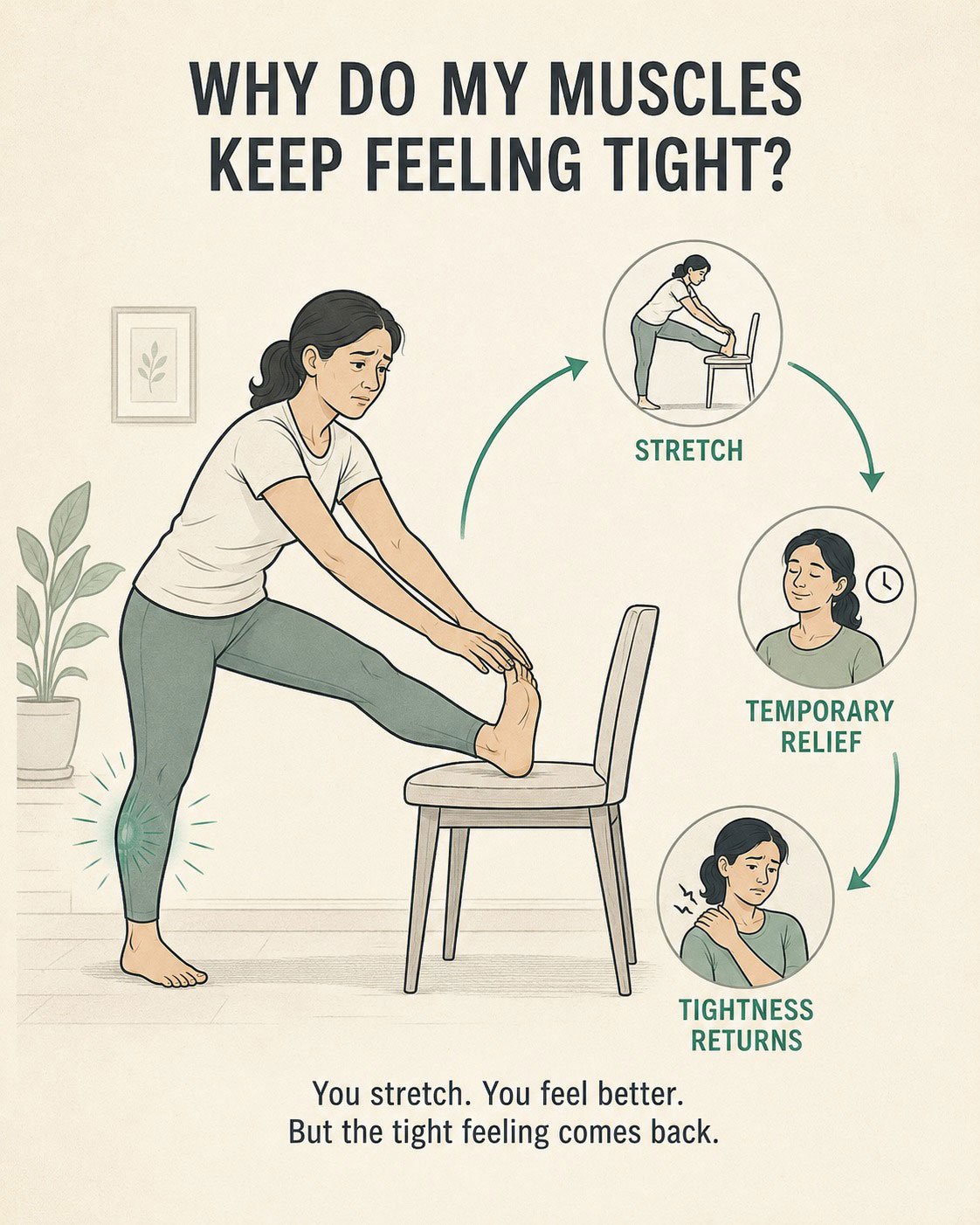
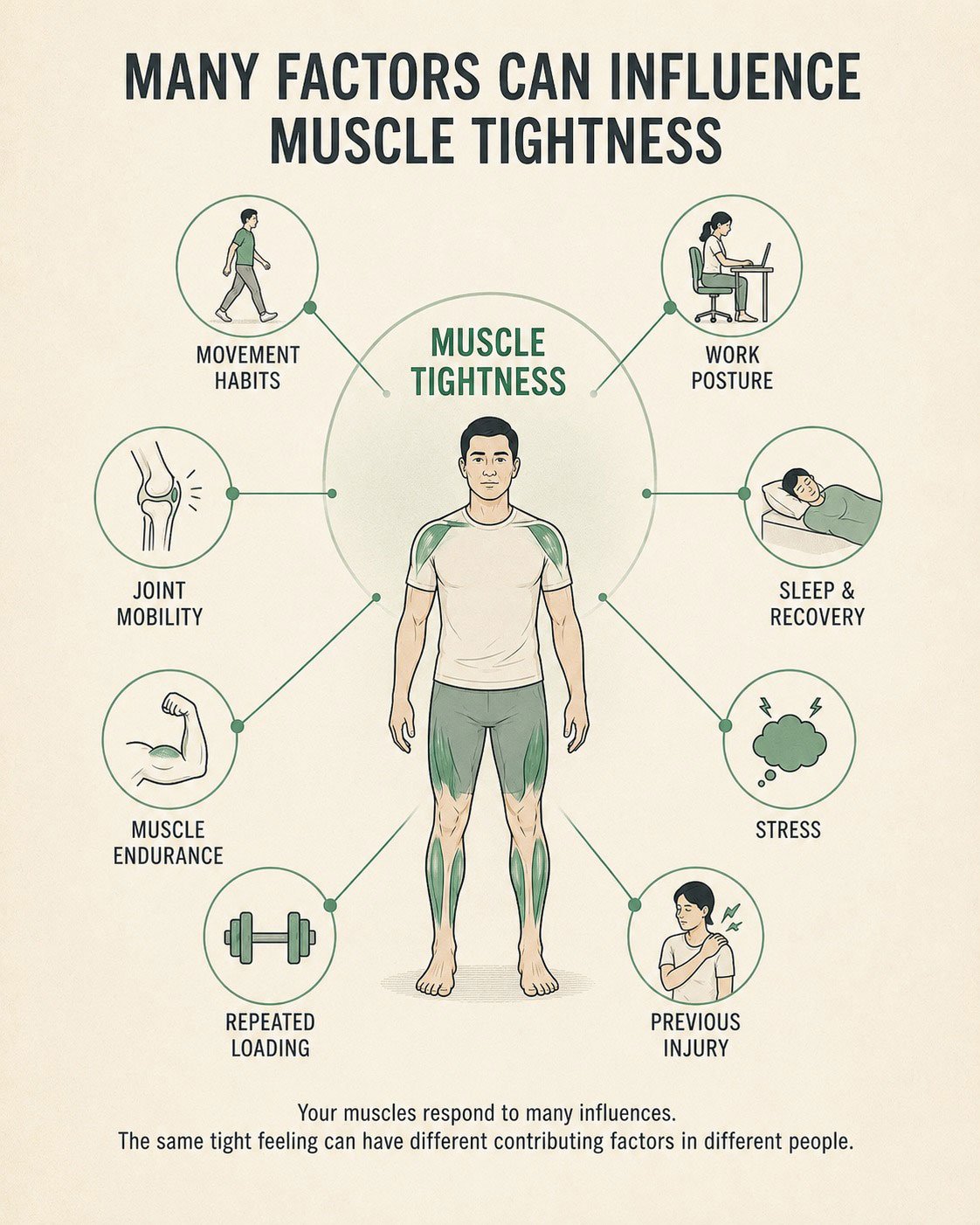
Persistent muscle tightness rarely has one universal explanation. Different people can experience the same sensation for very different reasons.
Several factors may contribute:
This is why simply finding the “tight muscle” does not always explain the entire problem.
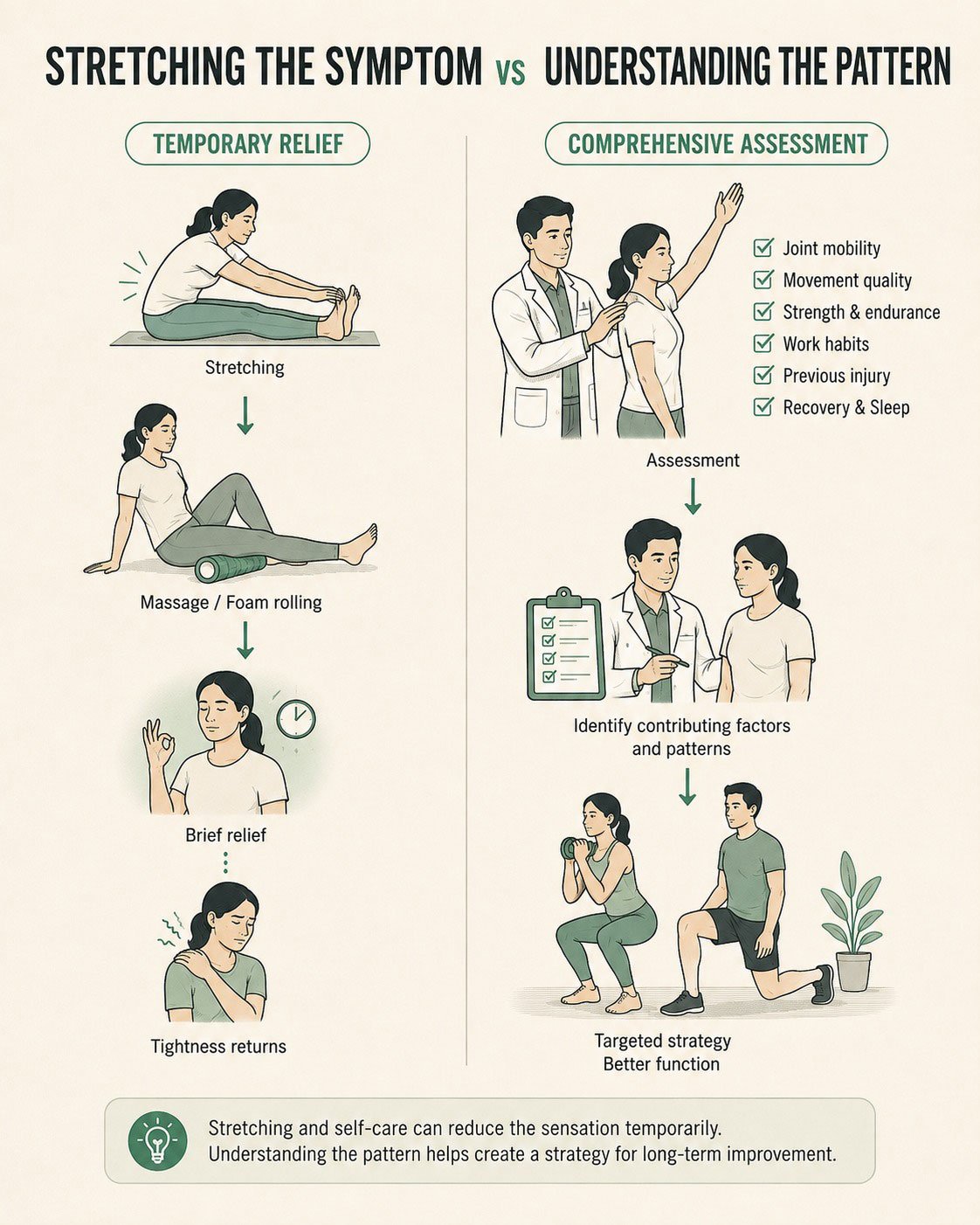
Stretching is not bad—and it is certainly not useless. It can temporarily reduce the sensation of tightness and improve flexibility or comfort. Massage and foam rolling may also provide short-term relief.
The problem arises when temporary relief is mistaken for resolution of the underlying contributor.
If tightness repeatedly returns, it may be useful to look beyond the local muscle and consider joint mobility, movement quality, strength and endurance, daily workload, previous injuries, sleep, and recovery.
The goal is not to keep stretching the same area indefinitely. The goal is to understand why that area keeps feeling tight in the first place.
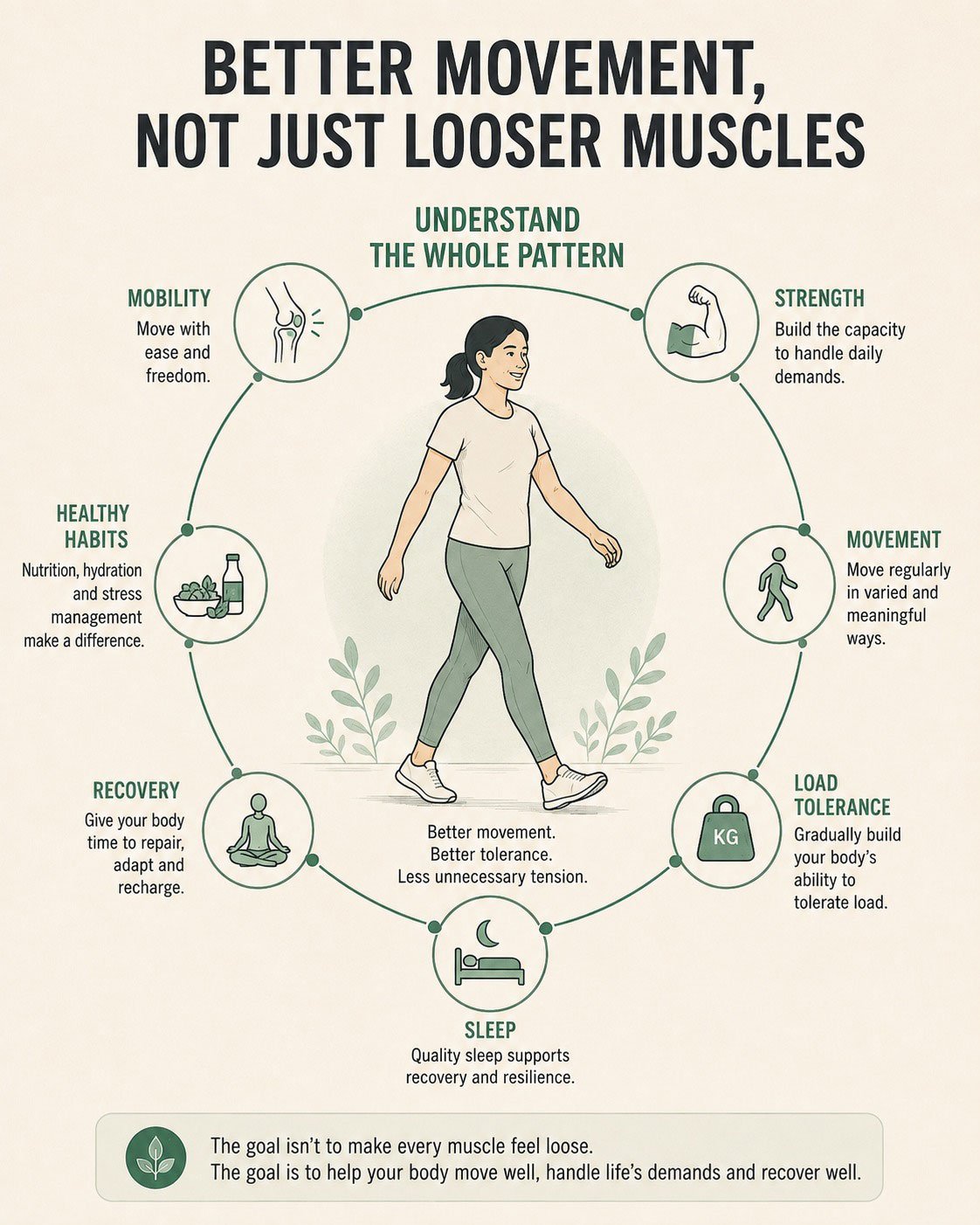
The goal of movement health is not to make every muscle permanently “loose.” Your body needs appropriate muscle tension for stability, movement, strength, and load tolerance.
A better goal is efficient movement, adequate mobility, balanced strength, appropriate load tolerance, and sufficient recovery.
Occasional tightness after exercise, prolonged activity, or a long day is common. However, persistent or widespread tightness—particularly when accompanied by pain, weakness, numbness, tingling, swelling, significant loss of movement, or functional limitation—deserves professional assessment.
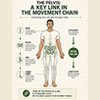
How your pelvis influences your entire body?
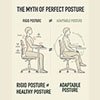
Does good posture mean sitting perfectly straight?
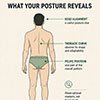
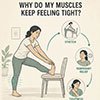
Why Do Your Muscles Always Feel Tight?

Understand Why Shoulder Pain Persists
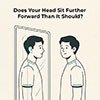
Why Does Your Head Sit Too Far Forward? What Your Posture May Be Telling You

One Shoulder Higher Than the Other? What Your Posture May Be Telling You

Does More Pain Always Mean More Damage?

Decode Your Eyes: What Are They Trying to Tell You?

Why Do You Keep Waking Between 2 AM and 4 AM?

Why Your Neck Pain Keeps Coming Back

Should You Rest When You're in Pain?

Decode Your Tongue: What Is It Trying to Tell You?


© 2021 AeAON – Arihant Ekata Aadya Omkara Namah. All Rights Reserved.