

Most of us only notice our tongue when we brush our teeth or accidentally sip a drink that's too hot. Yet this remarkably dynamic muscle can offer useful clues about our overall health.
Careful observation of the tongue has been part of clinical assessment in various healthcare traditions for centuries and remains an important component of oral examination today. Rather than looking for a single "diagnosis," clinicians use the tongue as one source of information that contributes to a broader understanding of a person's health.
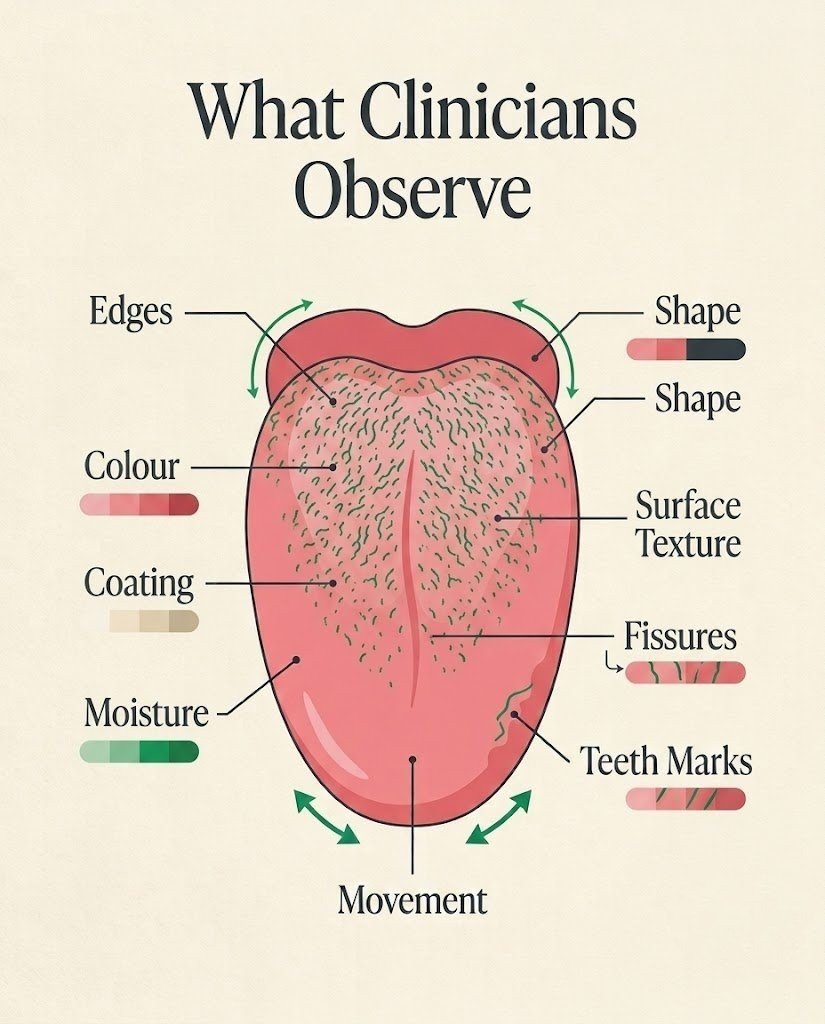
When clinicians observe the tongue, they don't focus on just one feature. Instead, they assess several characteristics together because each provides only part of the picture.
Colour: A healthy tongue is usually light pink. Changes in colour may have many possible explanations, including hydration status, circulation, medications, nutritional factors, infections, or certain medical conditions. Its appearance should always be interpreted in clinical context.
Coating: A thin coating is completely normal. A thicker coating may be associated with oral hygiene, dehydration, dietary factors, smoking, medications, or changes in the balance of microorganisms in the mouth.
Moisture:The tongue's moisture reflects saliva production and hydration, making it one of several clues about fluid balance.
Shape & Surface:Features such as fissures (cracks), surface texture, or teeth marks can have a variety of explanations, including normal anatomical variation, dental alignment, habitual pressure against the teeth, or other contributing factors.
Movement:The way the tongue moves may provide useful information about muscular coordination and neurological function during a clinical examination.

An unusual tongue colour or unexpected texture can certainly attract attention, but it should never be viewed as a standalone diagnosis. Searching online after noticing a change can often create unnecessary anxiety because a single observation rarely tells the complete story.
Different healthcare disciplines use different methods of assessment. Regardless of the approach, responsible clinicians interpret tongue findings alongside your symptoms, medical history, lifestyle, nutrition, sleep, medications, physical examination, and, when appropriate, laboratory investigations.
A single observation cannot confirm a specific medical condition. It is simply one clue within a much larger clinical picture.

Every part of the body tells a story—including the tongue. The key is understanding that no single sign should be interpreted in isolation.
If you notice persistent changes in the appearance of your tongue, experience discomfort, or have other ongoing symptoms, seek appropriate medical or dental evaluation.

How your pelvis influences your entire body?
Does good posture mean sitting perfectly straight?

Why Do Your Muscles Always Feel Tight?

Understand Why Shoulder Pain Persists

Why Does Your Head Sit Too Far Forward? What Your Posture May Be Telling You

One Shoulder Higher Than the Other? What Your Posture May Be Telling You

Does More Pain Always Mean More Damage?

Decode Your Eyes: What Are They Trying to Tell You?

Why Do You Keep Waking Between 2 AM and 4 AM?

Why Your Neck Pain Keeps Coming Back

Should You Rest When You're in Pain?

Decode Your Tongue: What Is It Trying to Tell You?


© 2021 AeAON – Arihant Ekata Aadya Omkara Namah. All Rights Reserved.