
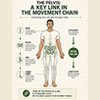
The pelvis is a key link between your spine, hips and lower
limbs.
It is often discussed in relation to low-back pain, hip problems
or posture. But the pelvis has a much broader role: it helps
connect the trunk with the lower limbs and contributes to how
forces are transferred and movement is coordinated throughout the
body.
At AeAON Aarohan, we therefore look at the pelvis as part of an integrated movement system—not as an isolated structure that simply needs to be “corrected.”
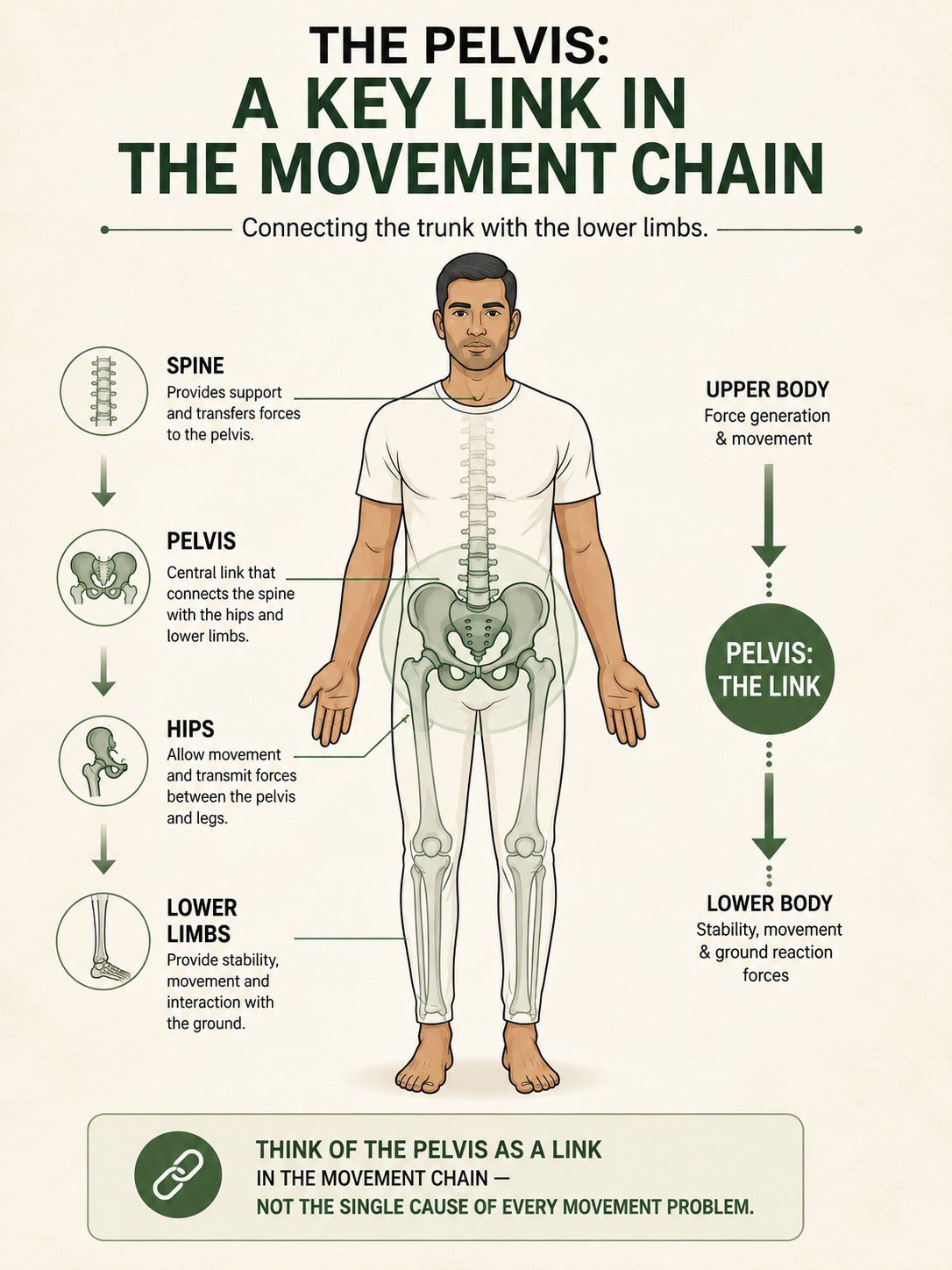
The pelvis sits between the spine and the lower limbs, creating an
important connection between the upper and lower parts of the
body.
Every time you stand, walk, bend, climb stairs, lift or change
direction, movement and load are shared across this system.
The pelvis works together with the:
This makes the pelvis an important link in the movement chain. But it is important not to make the opposite mistake either: the pelvis isnot the single cause of every movement problem or pain condition.
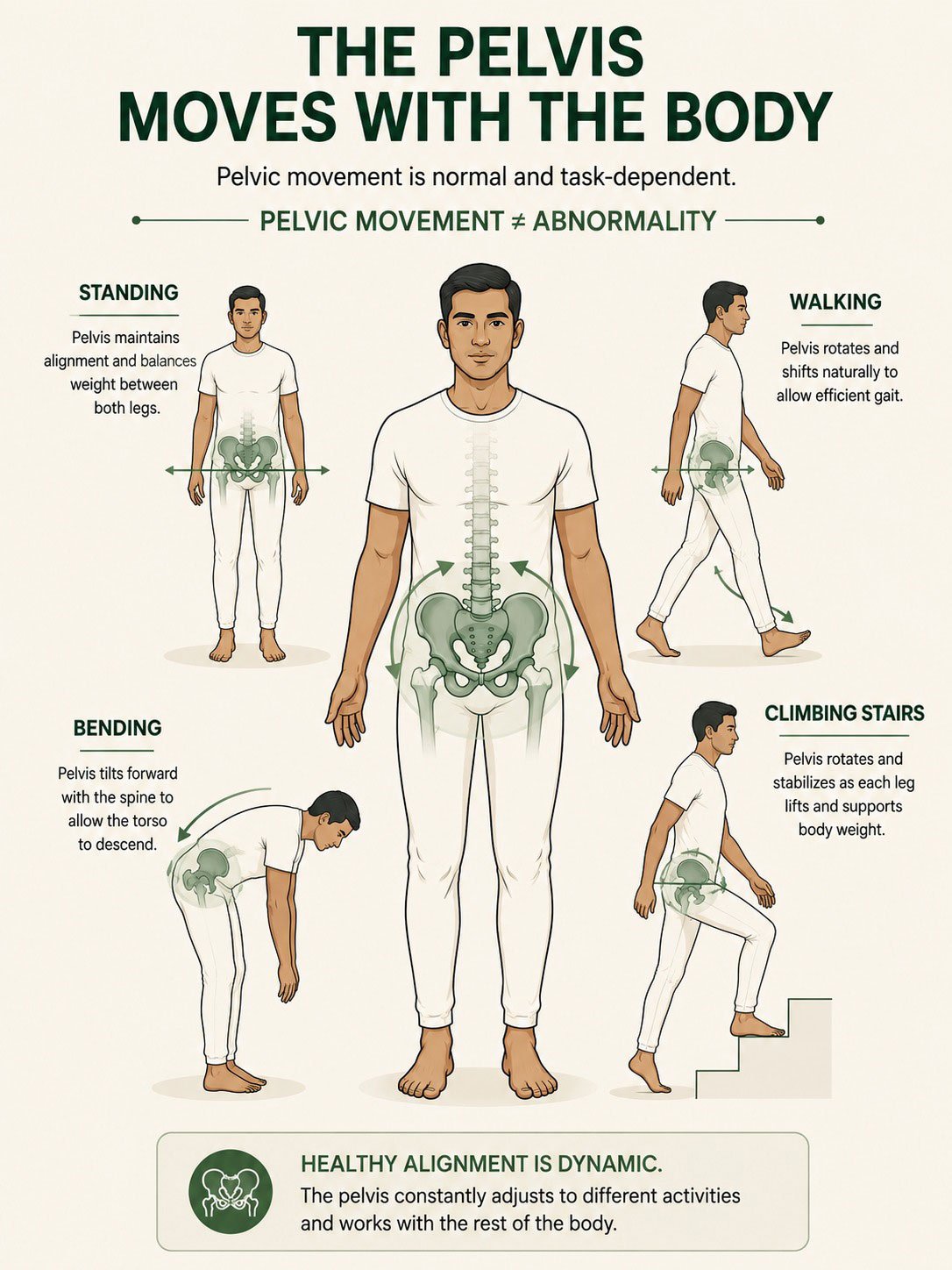
A healthy pelvis is not supposed to remain perfectly still.
It naturally tilts, rotates and shifts as you perform different
activities.
Consider what happens when you:
Walk:
The pelvis makes subtle movements that help coordinate the legs and trunk.
Bend:
The pelvis and lumbar spine contribute to the movement required to bring the trunk forward.
Climb stairs:
The pelvis must coordinate with the hip and lower limb as you transfer your weight and lift one leg after another.
Therefore,pelvic movement does not automatically mean abnormality.
Healthy movement is dynamic. The important question is not simply“Is the pelvis moving?” but “Is it moving appropriately for the task?”
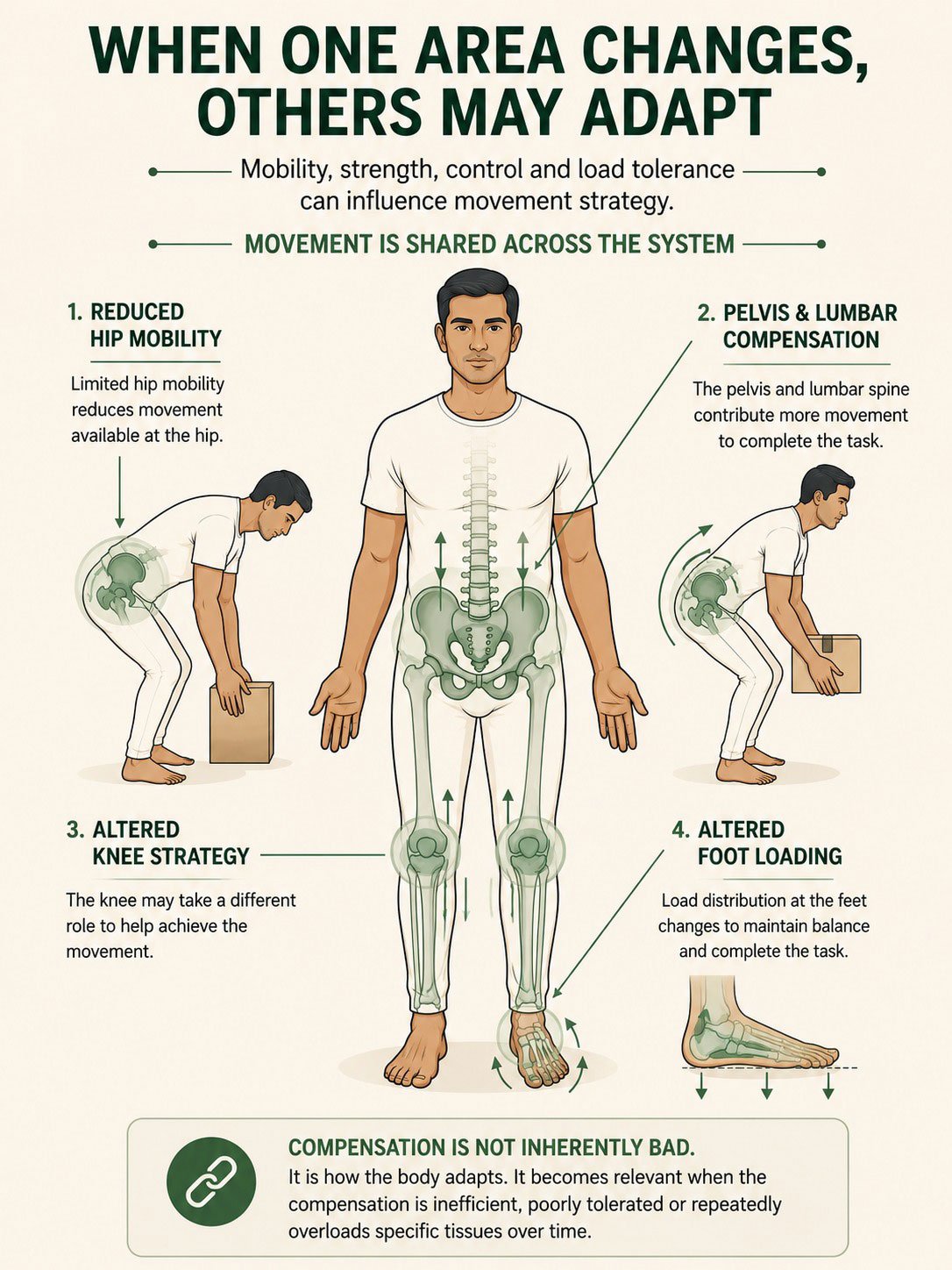
The body works as a coordinated system.
When mobility, strength, control or load tolerance is reduced in
one region, other areas may adapt their contribution to complete
the movement.
For example:
Reduced hip mobility may alter how the pelvis and lumbar spine contribute to a squat or walking pattern.
Reduced trunk control may change how the pelvis is stabilised during movement.
Altered foot or knee loading may influence how forces are transferred upward through the lower limb and pelvis.
These adaptations are not automatically harmful. Compensation is often the body's way of continuing to function when circumstances change.
It becomes clinically relevant when the strategy is poorly tolerated, inefficient, restricted, or repeatedly places excessive demand on particular tissues.
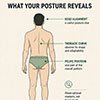
A photograph or static assessment can show you how the pelvis is
positioned at one particular moment.
But posture is only one part of the picture.
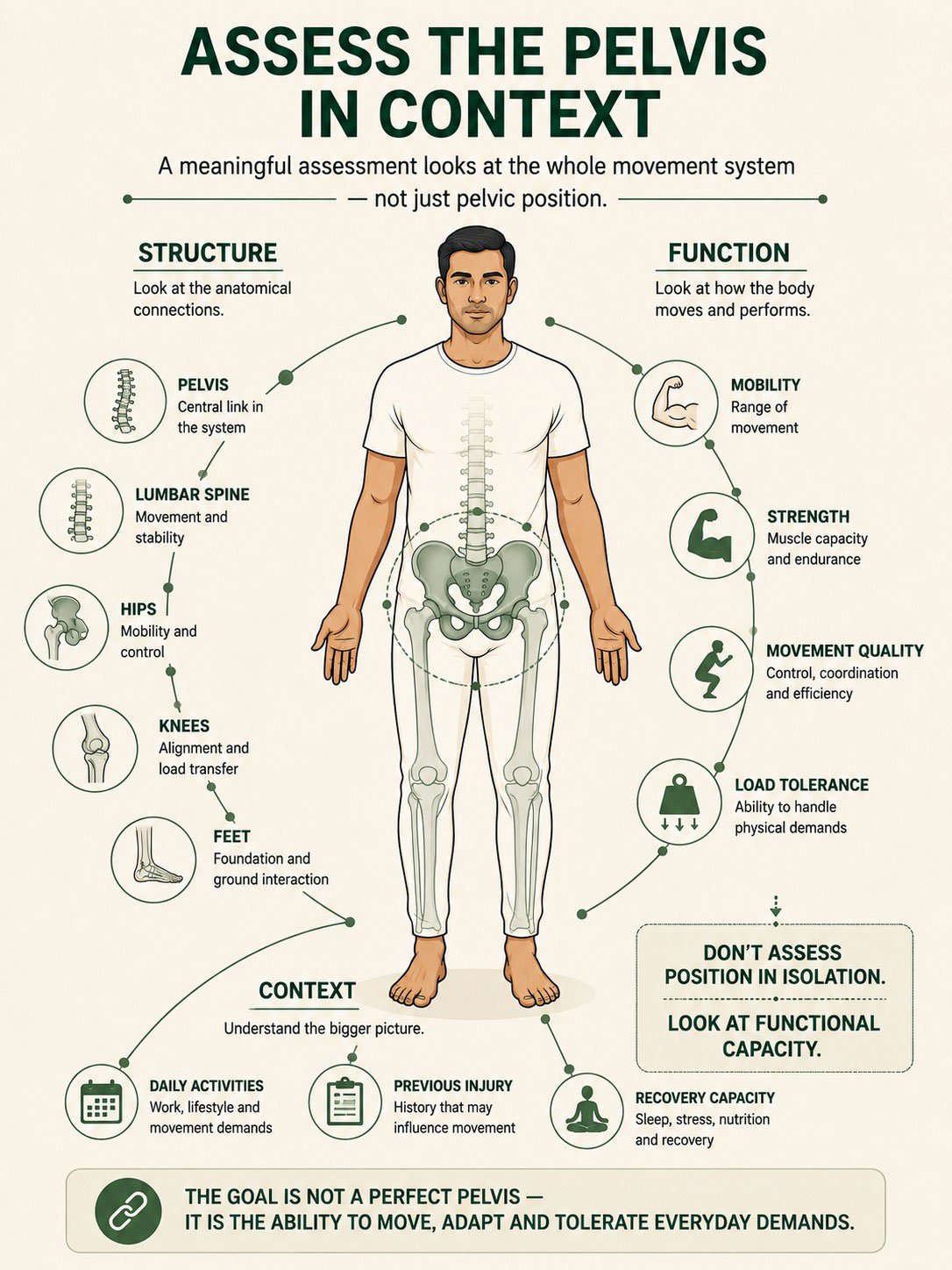
A meaningful assessment should consider:
STRUCTURE
The relationship between the pelvis, lumbar spine, hips, knees and feet.
FUNCTION
Mobility, strength, movement quality, coordination and load tolerance.
CONTEXT
Daily activities, work demands, previous injuries, recovery and the movements the person actually needs to perform.
This changes the question from:
“Is the pelvis perfectly aligned?”
to:
“How well does the pelvis contribute
to the
body's movement strategy?”
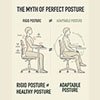
The human body does not need to maintain one rigid, “perfect” position throughout the day.
It needs the capacity to move, stabilise, rotate, shift load, absorb force and adapt to different demands.
Good alignment is therefore not about freezing the pelvis into one position.
It is about having enough movement capacity and adaptability to meet the demands of everyday life.
At AeAON Aarohan, we look beyond isolated posture and the location of pain. Structural and movement assessment helps us understand how different regions of the body interact—and how the body adapts when movement demands change.
The goal is not a perfect pelvis.
The goal is a body that can move, adapt and tolerate everyday demands.
How your pelvis influences your entire body?
Does good posture mean sitting perfectly straight?
Why Do Your Muscles Always Feel Tight?

Understand Why Shoulder Pain Persists
Why Does Your Head Sit Too Far Forward? What Your Posture May Be Telling You

One Shoulder Higher Than the Other? What Your Posture May Be Telling You

Does More Pain Always Mean More Damage?

Decode Your Eyes: What Are They Trying to Tell You?

Why Do You Keep Waking Between 2 AM and 4 AM?

Why Your Neck Pain Keeps Coming Back?

Should You Rest When You're in Pain?

Decode Your Tongue: What Is It Trying to Tell You?


© 2021 AeAON – Arihant Ekata Aadya Omkara Namah. All Rights Reserved.