
Picture a familiar workstation scene: you notice a little discomfort in your upper back, so you immediately pull your shoulders back, lift your chest, straighten your spine and try not to move.
Many of us have been taught that this rigid upright position is what “good posture” looks like.
But healthy posture is not about holding one perfect position.
MYTH:
“Good posture means sitting perfectly straight.”
REALITY: Healthy posture is the ability to move, change position and adapt to different demands.
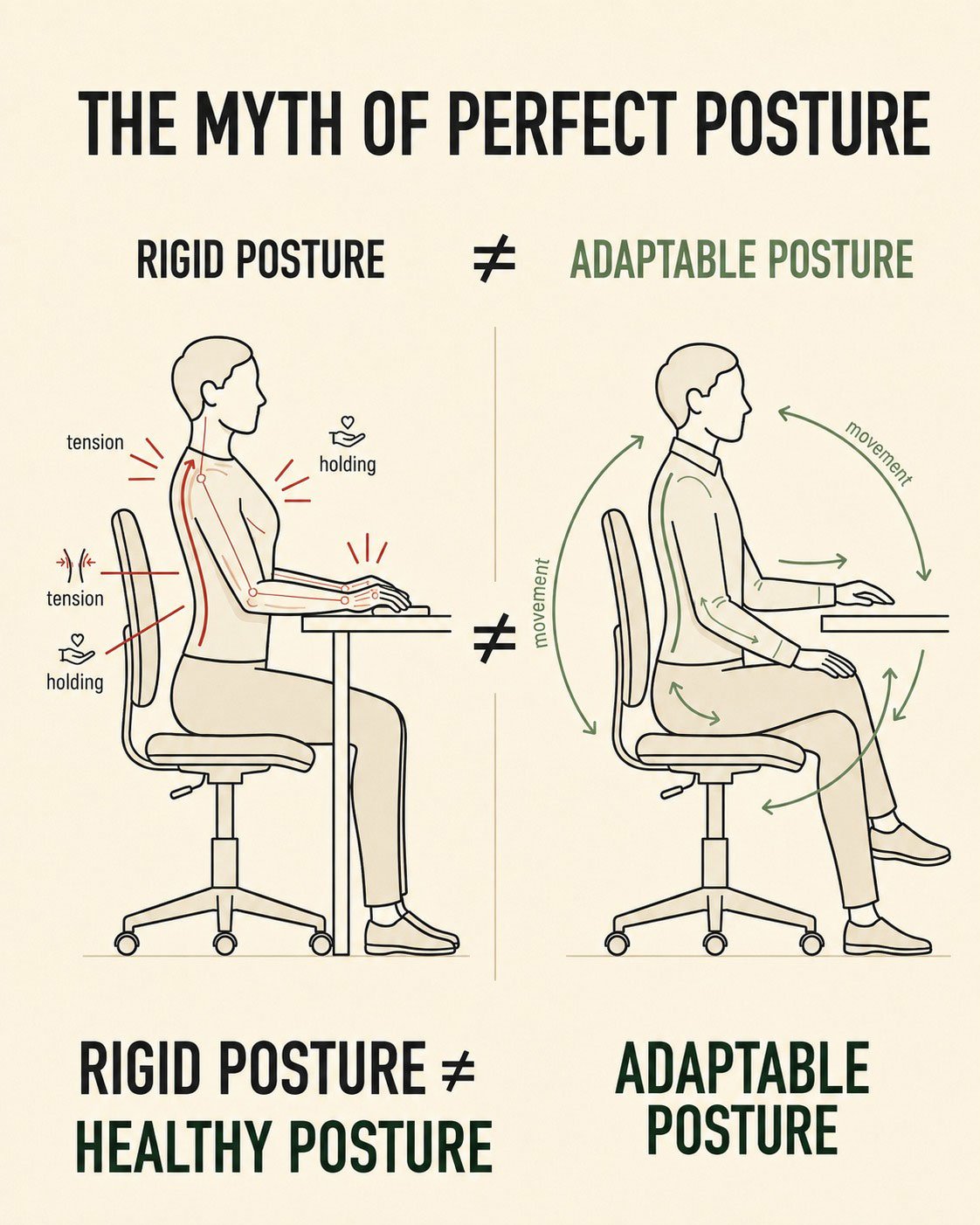
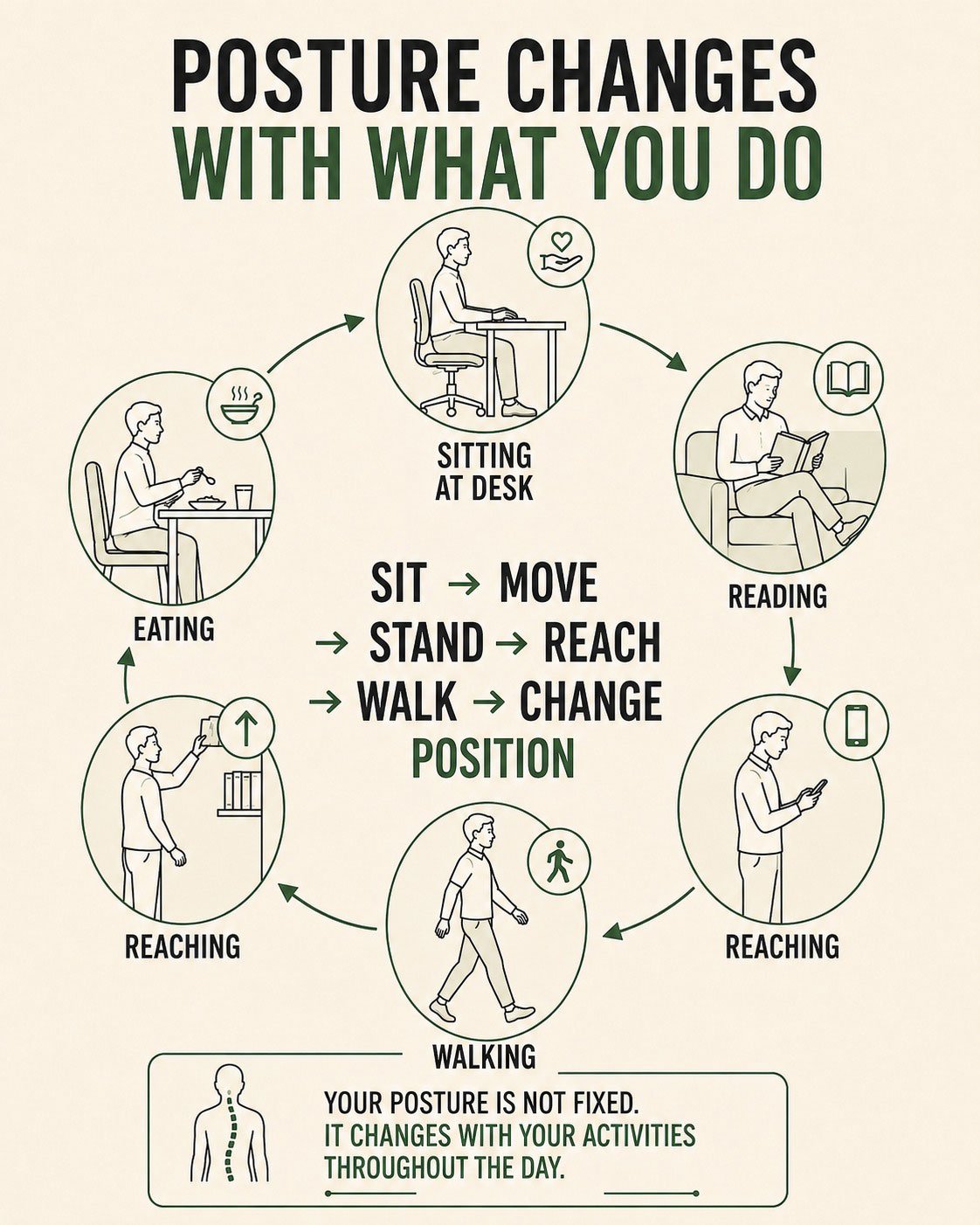
Your body does not use the same alignment for every activity.
Sitting at a desk, reading, using a phone, reaching, standing,
walking or lifting all require different positions and movement
strategies.
There is therefore no single posture that
can be maintained as the “perfect” position throughout the day.
Even a well-supported sitting position can become
uncomfortable when held for too long.
The body needs movement and variety—not rigid perfection.
Changing positions, taking short movement breaks and allowing your body to move naturally can be more useful than constantly trying to “sit straight.”
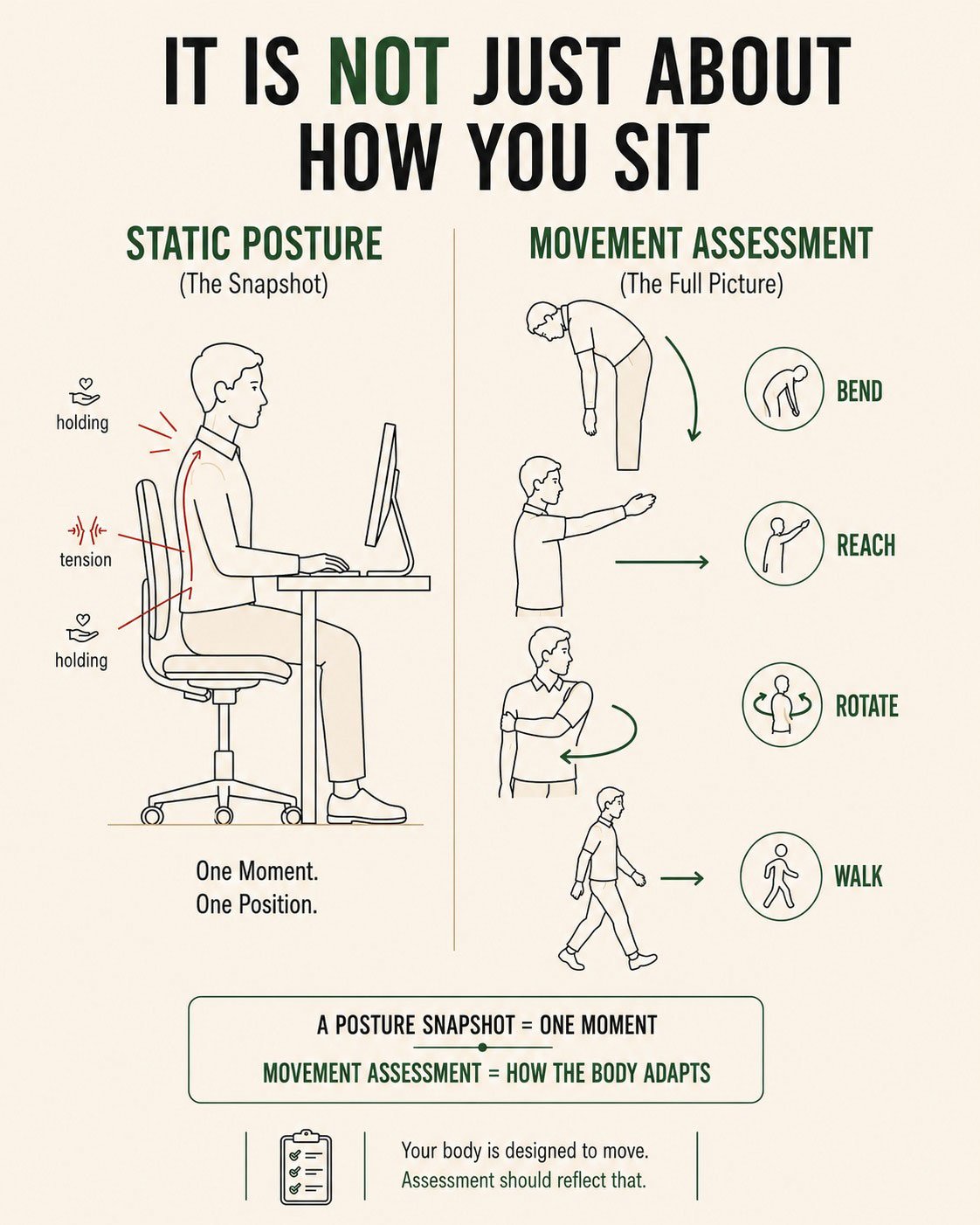
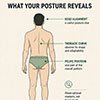
Looking at someone sitting or standing tells us what their posture looks like at that moment.
It does not necessarily tell us how well their body moves or adapts.
A meaningful assessment may also consider:
POSTURE IS A POSITION.
MOVEMENT REVEALS ADAPTABILITY.
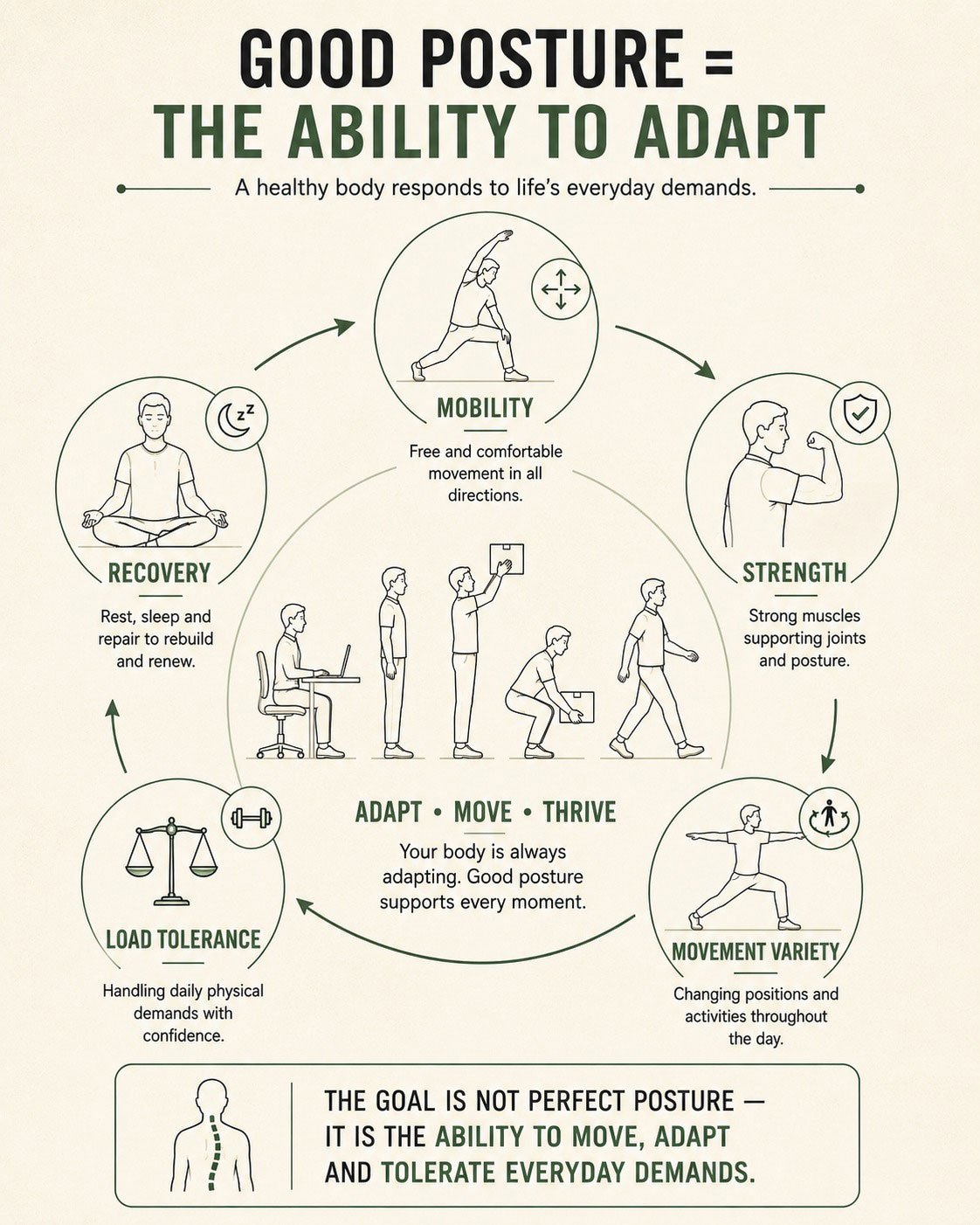
A healthy body should be able to sit, stand, walk, reach, bend and
change positions without being excessively restricted by the need
to maintain one “ideal” alignment.
What matters is the
capacity to move, adapt and tolerate everyday demands.
So instead of asking:
“Am I sitting perfectly straight?”
Ask:
“Can my body comfortably change position, move freely and
handle what I ask of it?”
THE GOAL IS NOT
PERFECT POSTURE.
THE
GOAL IS
MOVEMENT VARIETY
+
ADAPTABILITY
+
LOAD TOLERANCE.
If you experience persistent discomfort, significant stiffness or movement limitations, simply forcing yourself into a straighter posture may not address the underlying contributors.
A comprehensive assessment looks beyond a single posture and considers how your body moves, adapts and responds to everyday demands.
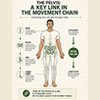
How your pelvis influences your entire body?
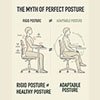
Does good posture mean sitting perfectly straight?
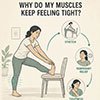
Why Do Your Muscles Always Feel Tight?

Understand Why Shoulder Pain Persists
Why Does Your Head Sit Too Far Forward? What Your Posture May Be Telling You

One Shoulder Higher Than the Other? What Your Posture May Be Telling You

Does More Pain Always Mean More Damage?

Decode Your Eyes: What Are They Trying to Tell You?

Why Do You Keep Waking Between 2 AM and 4 AM?

Why Your Neck Pain Keeps Coming Back?

Should You Rest When You're in Pain?

Decode Your Tongue: What Is It Trying to Tell You?


© 2021 AeAON – Arihant Ekata Aadya Omkara Namah. All Rights Reserved.