
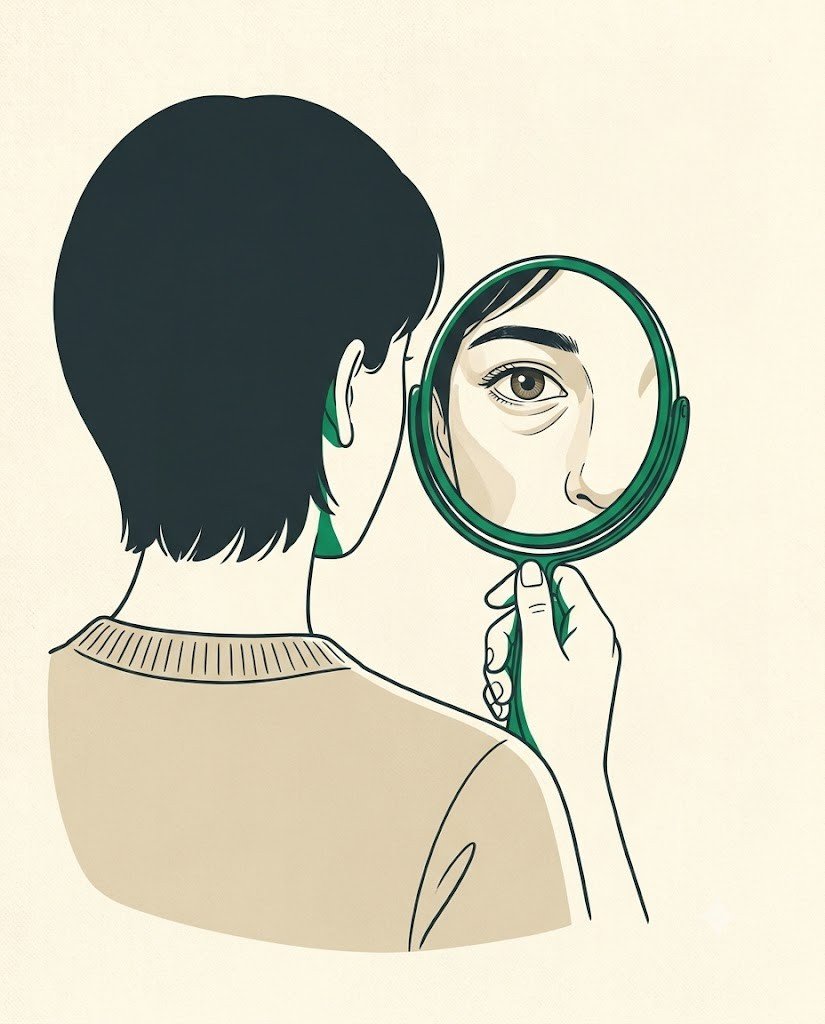
Most of us think about our eyes only when our vision becomes blurry or uncomfortable. Yet healthcare professionals often observe the eyes long before asking detailed questions or performing further examinations.
While your eyes help you see the world, they can also provide useful clinical clues about your overall health. Like many other parts of the body, they are carefully observed—not to make an instant diagnosis, but to gather information that contributes to a broader understanding of your well-being.
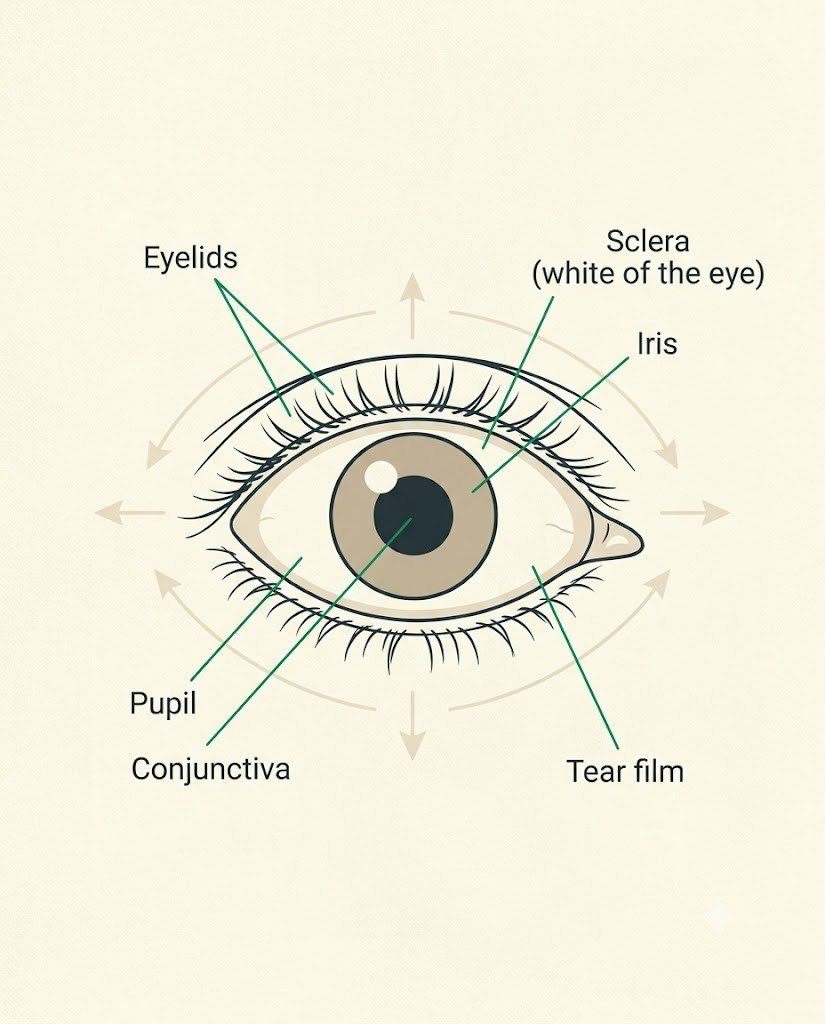
When assessing eye health, clinicians evaluate several features together rather than focusing on a single sign. They may examine the sclera (the white of the eye) for redness or yellowing, assess pupil size and symmetry, observe eye movements, inspect the conjunctiva, and evaluate the tear film for dryness or excessive watering. Eyelid swelling or puffiness can also provide useful clinical clues.
A single eye finding cannot diagnose a medical condition. Redness, for example, may result from fatigue, dry eyes, allergies, irritation, infection, or many other causes. Likewise, while many claims exist online, the appearance of the iris alone cannot reliably diagnose diseases affecting other organs.
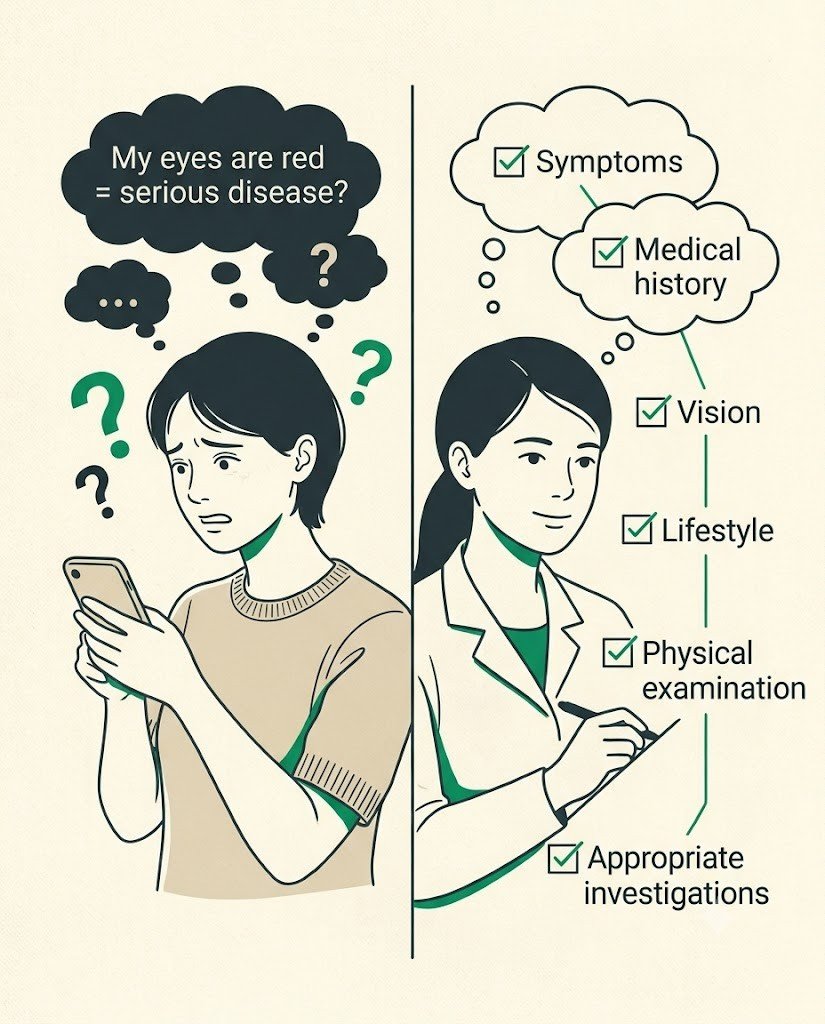
Eye changes represent only one piece of a much larger clinical picture. Similar appearances can occur for many different reasons, which is why responsible clinicians never rely on a single observation alone.
Instead, they interpret eye findings alongside your symptoms, medical history, vision, lifestyle, physical examination, and—when appropriate—further investigations. This comprehensive approach helps distinguish temporary changes from findings that deserve closer attention.
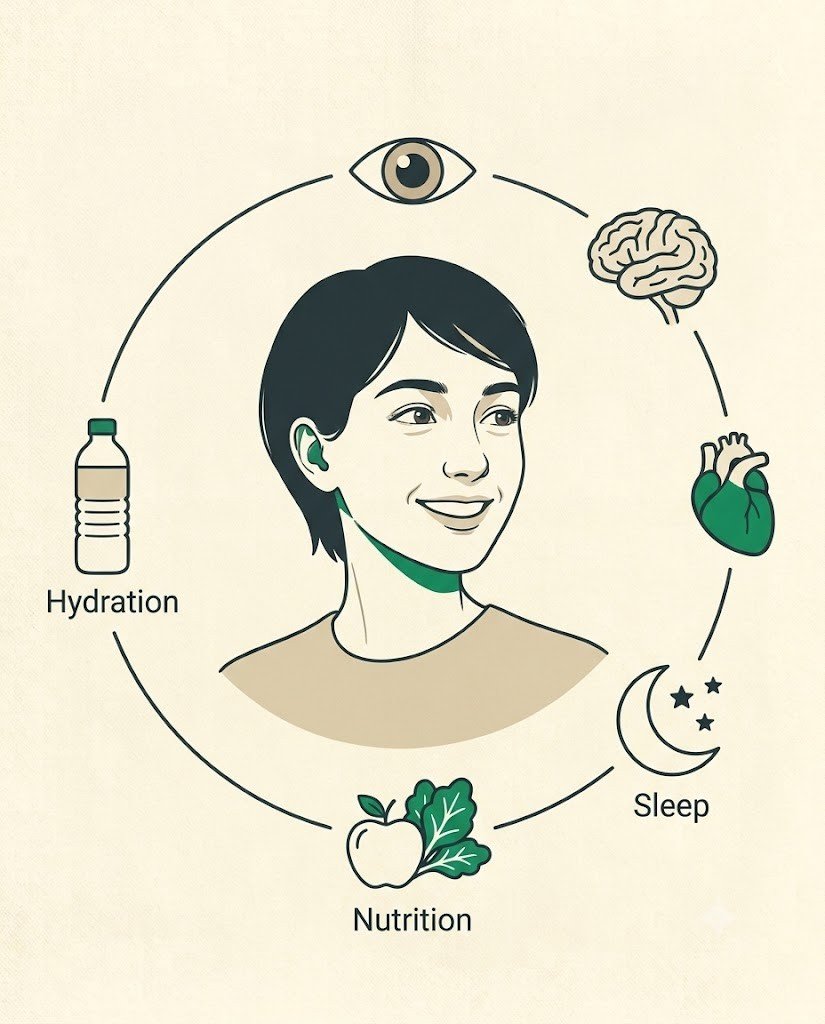
Healthy eyes are part of overall health. Understanding the body's observable clues is valuable—but interpreting those clues within the right clinical context matters even more.
If you notice persistent changes in your eyes or vision, seek an appropriate medical or eye-care evaluation.

How your pelvis influences your entire body?
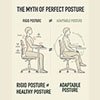
Does good posture mean sitting perfectly straight?
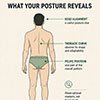

Why Do Your Muscles Always Feel Tight?

Understand Why Shoulder Pain Persists
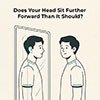
Why Does Your Head Sit Too Far Forward? What Your Posture May Be Telling You

One Shoulder Higher Than the Other? What Your Posture May Be Telling You

Does More Pain Always Mean More Damage?

Decode Your Eyes: What Are They Trying to Tell You?

Why Do You Keep Waking Between 2 AM and 4 AM?

Why Your Neck Pain Keeps Coming Back?

Should You Rest When You're in Pain?

Decode Your Tongue: What Is It Trying to Tell You?


© 2021 AeAON – Arihant Ekata Aadya Omkara Namah. All Rights Reserved.