
Have you ever noticed that your head appears to sit slightly in front of your shoulders when you catch your reflection in a mirror or see yourself in a photograph? This common postural pattern, often called Forward Head Posture (FHP), has become increasingly familiar in modern life. While it is frequently discussed in clinics and on social media, understanding what it really means is far more important than simply trying to "fix" it.
As you read this article, take a moment to notice where your head naturally sits. Is it comfortably balanced over your shoulders, or does it tend to drift forward?
Forward head posture usually develops gradually, making it difficult to recognize in everyday life. Because the change happens slowly, it often feels completely normal to the person experiencing it. Although this posture alone does not automatically cause pain or injury, maintaining it for prolonged periods may increase the mechanical demands placed on the muscles and joints of the neck and upper back over time.
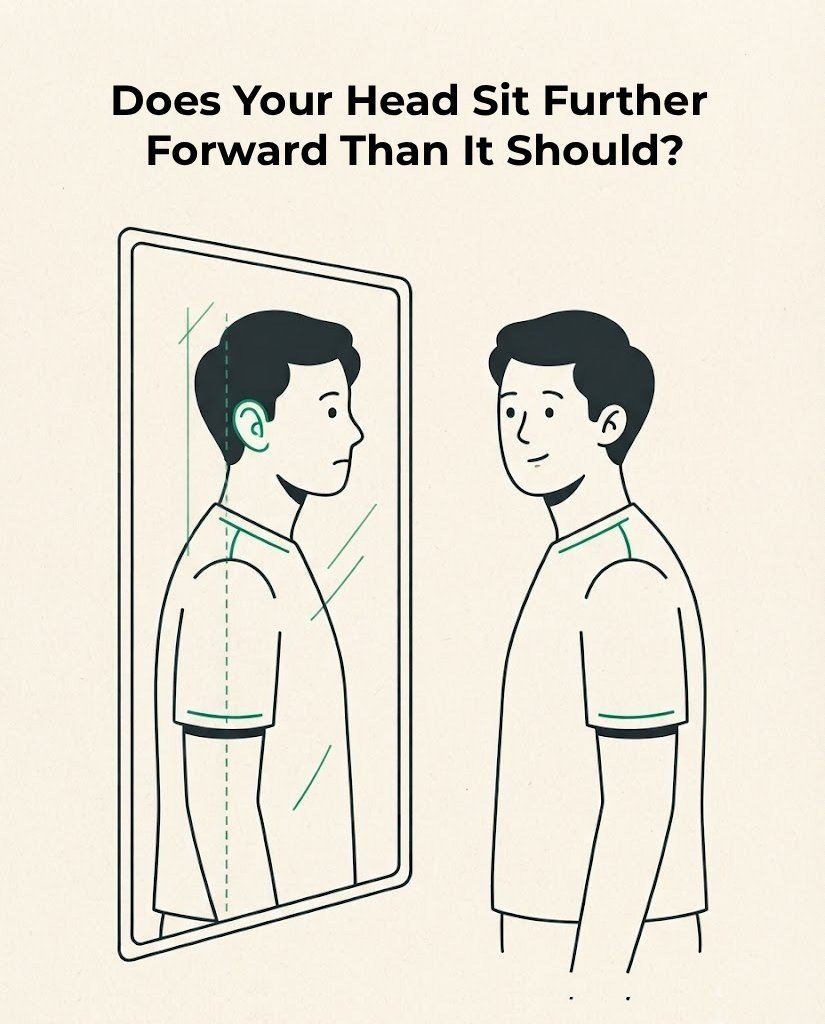
The human body constantly adapts to the positions and movements we repeat every day. Contrary to popular belief, mobile phones alone do not "cause" forward head posture. Instead, it develops through the combined influence of our daily habits, work environments, movement patterns, and physical conditioning.
Head position depends on the coordinated function of the cervical spine, upper back (thoracic spine), shoulders, surrounding muscles, and nervous system. Spending long hours at a computer, reading, driving, or looking down at a phone can gradually encourage the head to move forward, particularly when these activities are combined with reduced upper back mobility, limited movement throughout the day, or poor workstation ergonomics.
It is equally important to remember that posture is only one piece of the puzzle. Many people with forward head posture have no pain, while others with relatively good posture may experience significant discomfort. The relationship between posture and pain is far more complex than appearance alone.
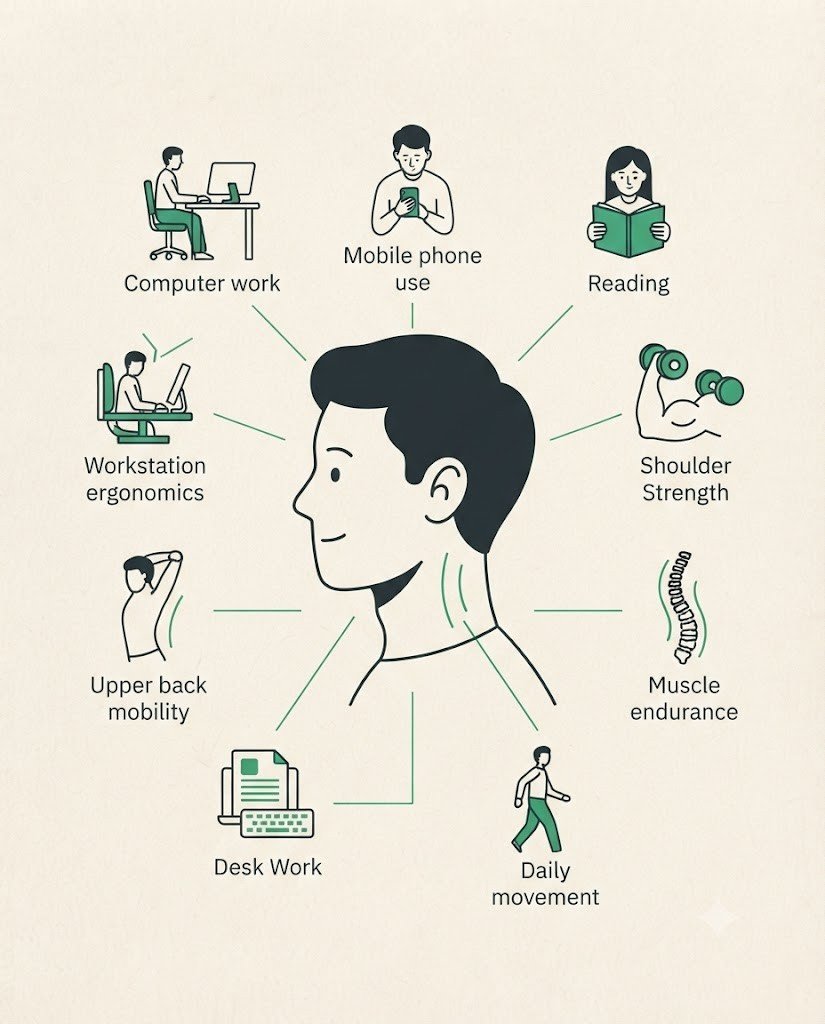
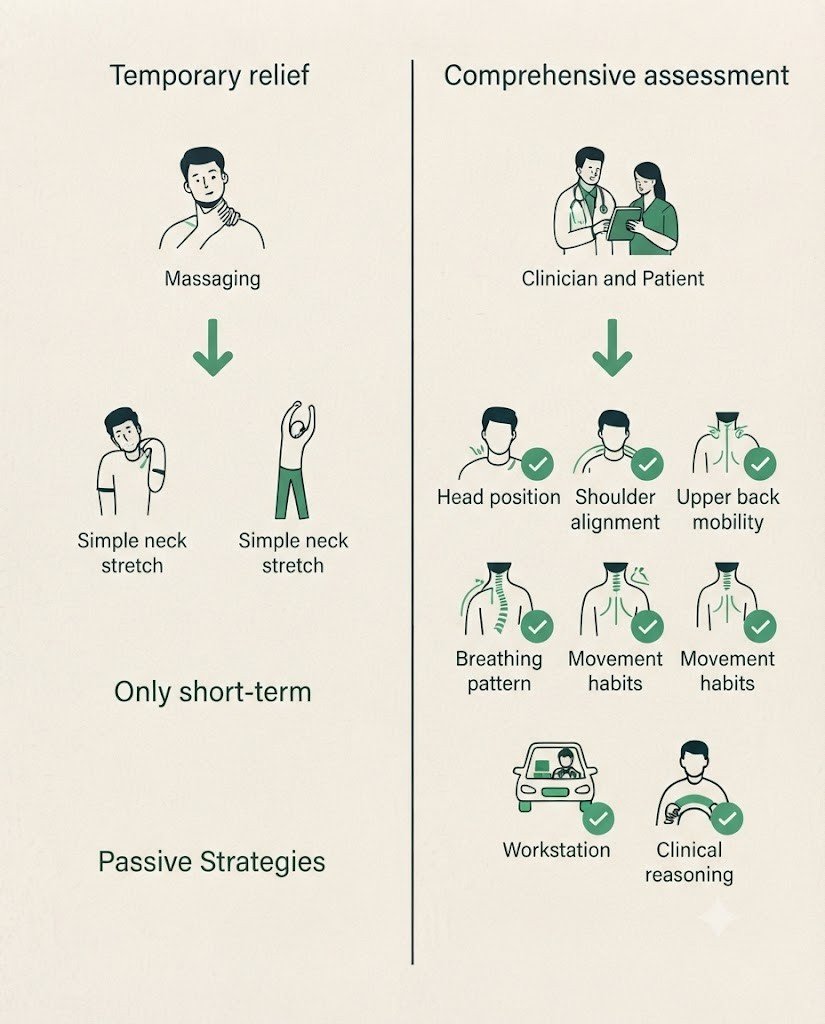
Because forward head posture rarely exists in isolation, focusing only on the neck often provides temporary relief rather than lasting improvement.
A comprehensive assessment looks beyond where the discomfort is felt. Clinicians evaluate how the head, shoulders, upper back, breathing pattern, muscle endurance, movement habits, workstation setup, and overall body mechanics interact with one another.
Rather than relying on a single observation, professional assessment helps determine which findings are simply normal variations and which may be contributing to persistent symptoms. This broader understanding allows treatment and rehabilitation to be tailored to the individual rather than applying the same exercises to everyone.
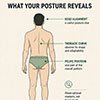
An uneven shoulder does not automatically indicate a medical problem. Often, it simply reflects how your body has adapted to everyday activities and movement patterns.
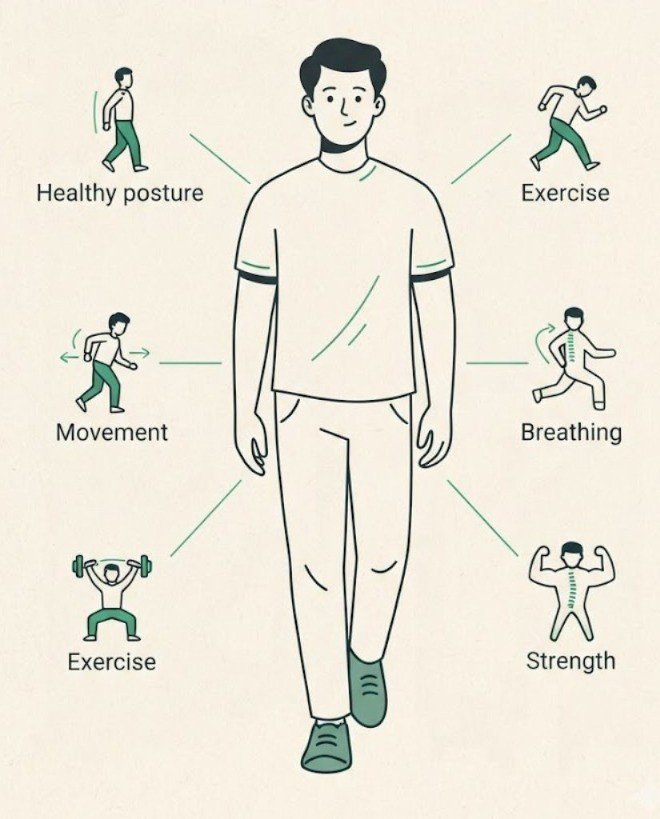
Good posture is not about standing perfectly straight or maintaining one rigid position throughout the day. Instead, it is about moving efficiently, changing positions regularly, and allowing your body to manage everyday loads comfortably.
If you notice persistent forward head posture together with recurring neck pain, headaches, shoulder tension, or upper back stiffness, a professional assessment can help identify the factors contributing to these symptoms and guide an appropriate management plan.
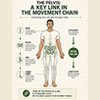
How your pelvis influences your entire body?
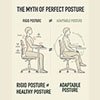
Does good posture mean sitting perfectly straight?
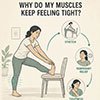
Why Do Your Muscles Always Feel Tight?
Understand Why Shoulder Pain Persists
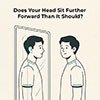
Why Does Your Head Sit Too Far Forward? What Your Posture May Be Telling You

One Shoulder Higher Than the Other? What Your Posture May Be Telling You

Does More Pain Always Mean More Damage?

Decode Your Eyes: What Are They Trying to Tell You?

Why Do You Keep Waking Between 2 AM and 4 AM?

Why Your Neck Pain Keeps Coming Back?

Should You Rest When You're in Pain?

Decode Your Tongue: What Is It Trying to Tell You?

© 2021 AeAON – Arihant Ekata Aadya Omkara Namah. All Rights Reserved.