

Most of us instinctively believe that severe pain must mean a severe injury. It seems logical—the more something hurts, the more damage must have occurred. But the human body is far more complex than a simple alarm system. While pain is an important warning signal, its intensity does not always reflect the amount of tissue damage. Understanding why pain happens is the first step toward effective, long-term recovery.
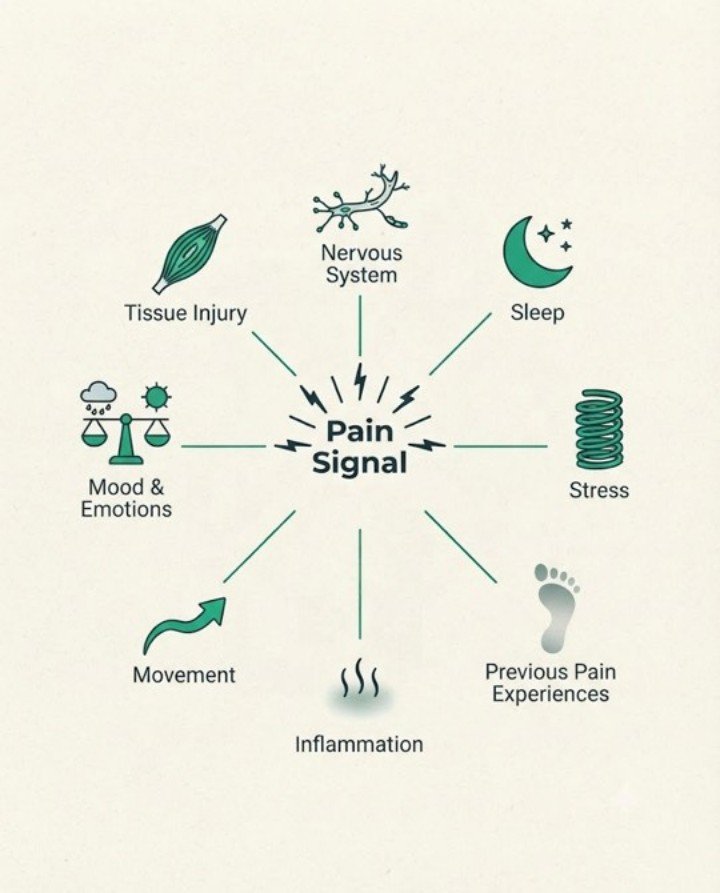
Pain is your body's protective alarm system. It is produced by the nervous system to encourage you to protect an injured or potentially threatened area. In many acute situations, this warning is remarkably accurate—a fresh, sharp pain often reflects tissue damage that needs time to heal.
However, pain is not determined by tissue injury alone. Modern pain science shows that your nervous system constantly processes information from multiple sources, including inflammation, stress, sleep quality, emotions, previous pain experiences, and movement patterns. Together, these factors influence how strongly pain is perceived. In some cases, the nervous system becomes more sensitive than the tissues themselves, allowing pain to persist even after the original injury has largely healed.
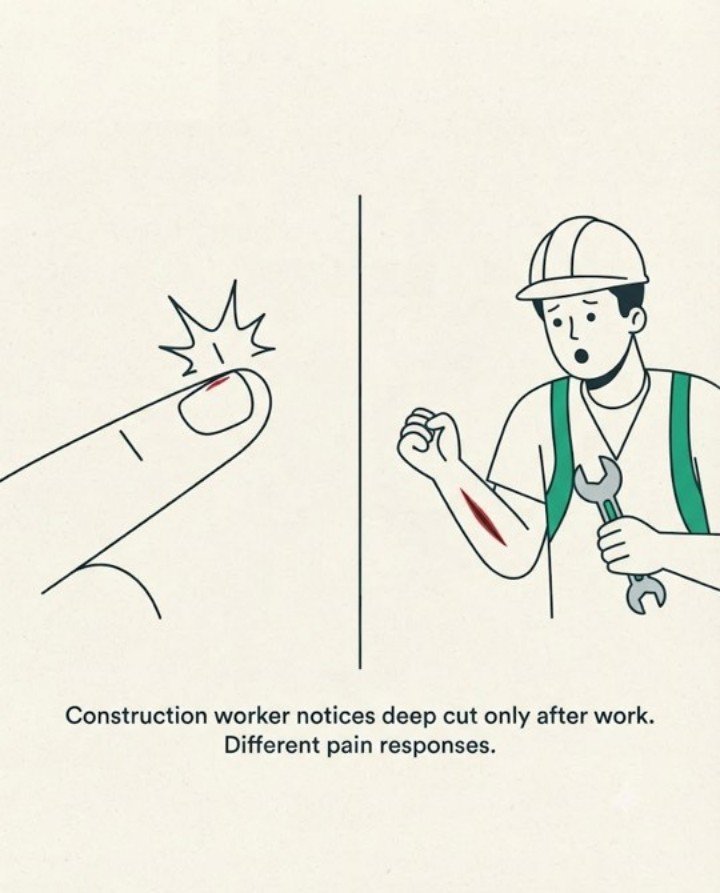
The intensity of pain does not always match the amount of structural damage. A tiny paper cut can feel surprisingly painful because fingertips contain a high density of nerve endings. On the other hand, an athlete may finish a race before noticing a sprained ankle, with the pain becoming obvious only afterwards.
This is why persistent pain deserves careful evaluation rather than assumptions. Severe pain does not automatically indicate severe damage, and mild pain does not necessarily mean everything is functioning normally. A professional assessment looks beyond the pain score by considering your symptoms, medical history, movement patterns, physical examination, and—when appropriate—additional investigations to understand the complete picture.
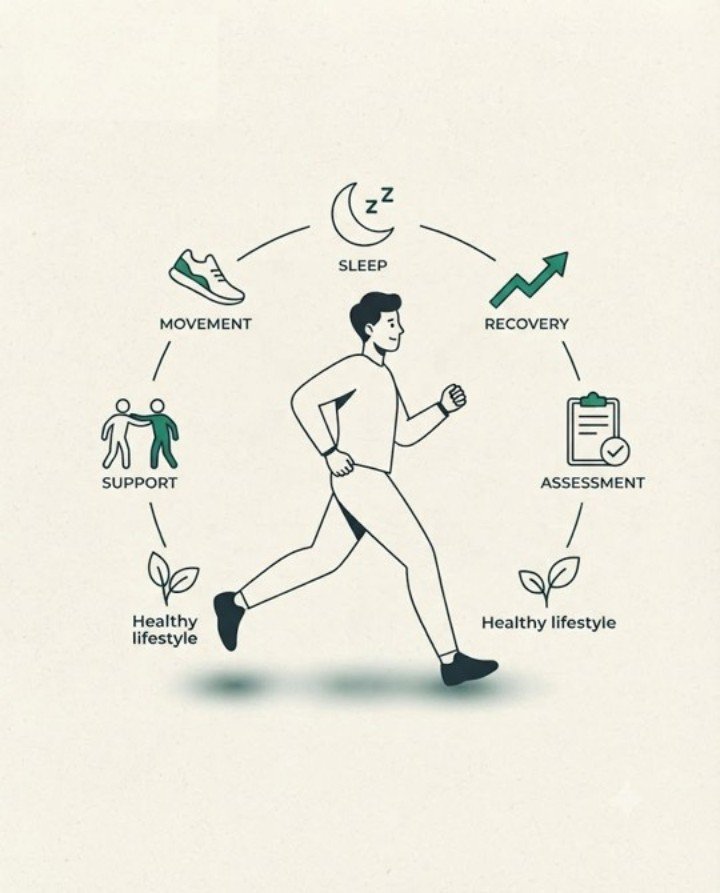
Pain is a message—not a measurement. Understanding why your body is sending that message is often more valuable than judging it by its intensity alone.
Persistent, severe, or unexplained pain should always be professionally assessed to ensure your recovery plan is based on evidence rather than assumptions.

How your pelvis influences your entire body?

Does good posture mean sitting perfectly straight?


Why Do Your Muscles Always Feel Tight?

Understand Why Shoulder Pain Persists

Why Does Your Head Sit Too Far Forward? What Your Posture May Be Telling You

One Shoulder Higher Than the Other? What Your Posture May Be Telling You

Does More Pain Always Mean More Damage?

Decode Your Eyes: What Are They Trying to Tell You?

Why Do You Keep Waking Between 2 AM and 4 AM?

Why Your Neck Pain Keeps Coming Back?

Should You Rest When You're in Pain?

Decode Your Tongue: What Is It Trying to Tell You?


© 2021 AeAON – Arihant Ekata Aadya Omkara Namah. All Rights Reserved.